
Adding value for your metal plate products.


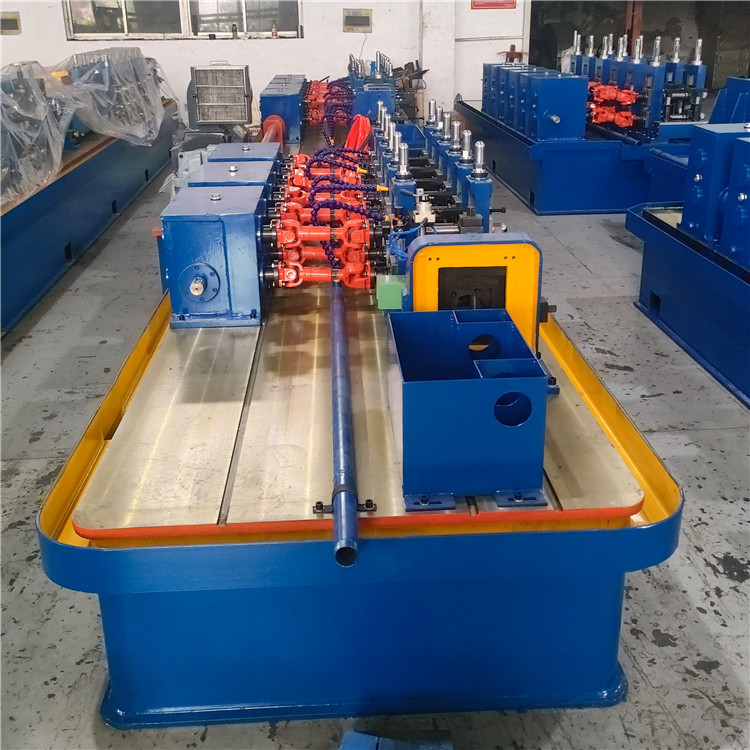
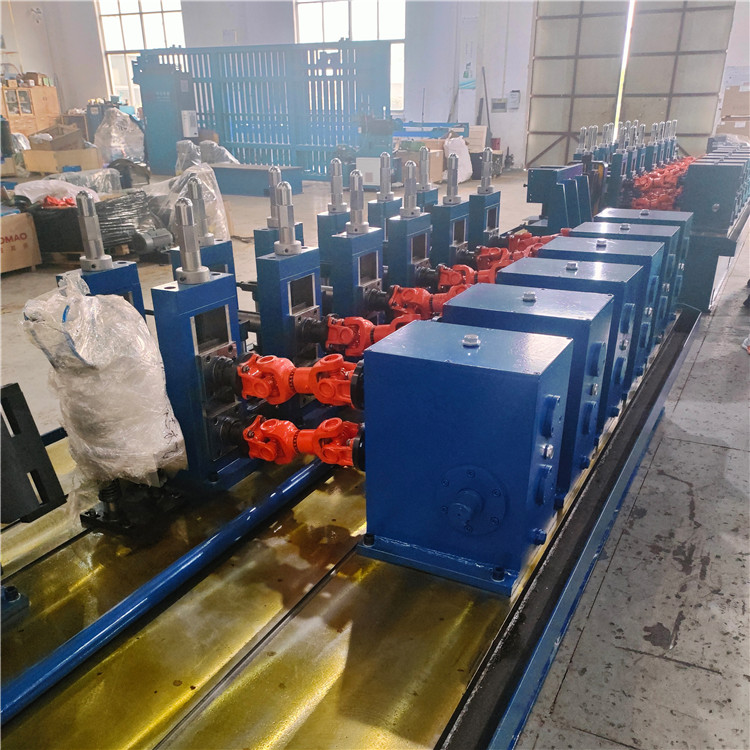
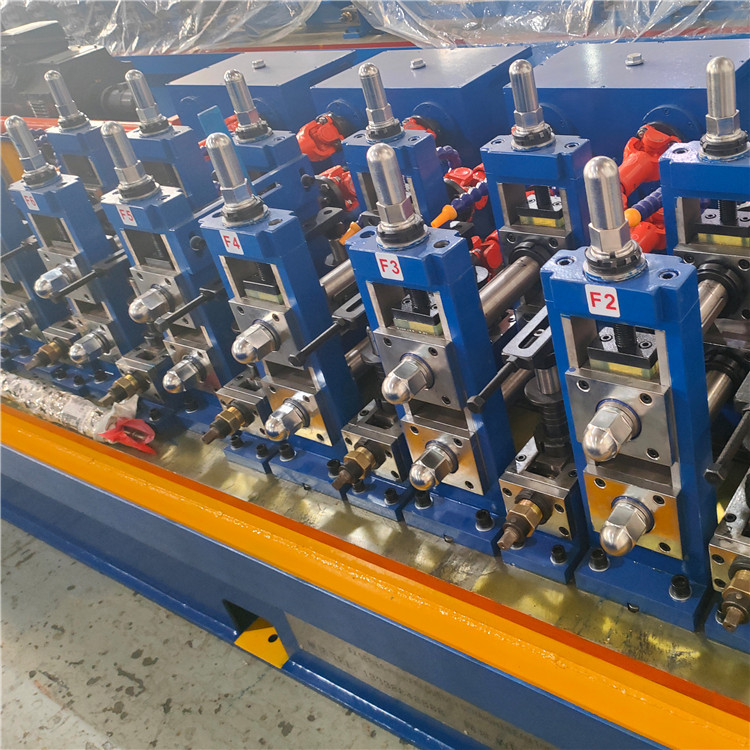
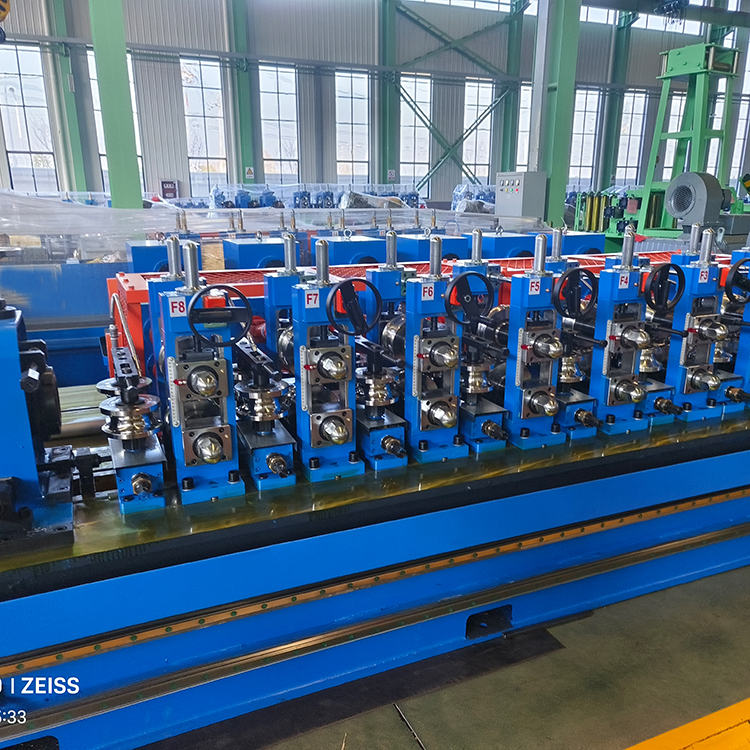
Round Pipe O.D.: 7–25 mm
Round Pipe Thickness: 0.2–1.0 mm
Square Tube Size: 20 × 20 mm
Square Tube Thickness: 0.2–0.8 mm
Reference Line Speed: 20–120 m/min
Main Drive / H.F. Welder: 37 kW / 100 kW
Voltage: 220 / 380 / 415 / 420 / 440 V
Reference Line Weight: Approx. 29,000 kg
This ERW tube mill is presented for continuous production of small-diameter carbon-steel welded tubes. Line speed is evaluated together with pipe diameter, wall thickness, material grade, weld stability and cutting requirements—not as an isolated maximum figure.

Speed selection note: The listed 20–120 m/min is a reference range. A production proposal should state the expected speed for each required tube size and wall thickness.
| Item | Reference specification |
|---|---|
| Round pipe outside diameter | 7–25 mm |
| Round pipe wall thickness | 0.2–1.0 mm |
| Square tube size | 20 × 20 mm |
| Square tube wall thickness | 0.2–0.8 mm |
| Reference line speed | 20–120 m/min |
| Main drive / high-frequency welder | 37 kW / 100 kW |
| Power supply | 220 / 380 / 415 / 420 / 440 V, configured for the destination |
| Reference line weight | Approx. 29,000 kg |
These are reference values from the current product record. Final output and configuration depend on tube size, wall thickness, material, welding conditions and cut length.

outside diameter and wall thickness of the welded tube;
strip material, edge condition and coil continuity;
high-frequency welding stability and cooling conditions;
cut length and the operating range of the cutting system;
roller setup, maintenance condition and operator experience.
This page therefore treats speed as an application-dependent result. The technical proposal should confirm the expected production range instead of promising one speed for every tube.

Coil preparation: load and release steel strip from the uncoiler.
Strip joining: trim and join coil ends for more continuous feeding.
Roll forming: gradually form flat strip into an open tube.
ERW welding: heat and press the strip edges to form the longitudinal seam.
Cooling and sizing: stabilize and control finished tube geometry.
Cutting and collection: cut tubes to the required commercial length.

Supports the coil and feeds steel strip into the line. Capacity and expansion method are selected according to coil data.

Trims and joins consecutive strip ends to prepare continuous feeding through the production line.

Roll stands progressively form the strip before high-frequency welding closes the longitudinal seam.

Controls the final geometry and dimensions. The roller arrangement is matched to the ordered round or square tube range.

Cuts continuously produced tube to the ordered length. The solution is selected around line speed and product range.

For a line intended to run at higher output, buyers should review the full production flow rather than only the forming mill. Coil handling, strip joining, accumulation, welding, cooling, sizing and cutting must be compatible with the target product plan.
match the welder and drive system to the required tube range;
select rollers for the confirmed diameter and wall-thickness matrix;
define the cutting method and finished-length tolerance in the proposal;
confirm electrical standards and workshop utilities before manufacturing;
plan maintenance access around the complete line layout.

To prepare a useful technical proposal, please provide:
tube shapes and minimum/maximum dimensions;
wall-thickness range and raw-material grade;
coil width, coil weight and strip condition;
finished cut length and target output;
factory voltage, frequency and phase;
available workshop length and layout restrictions.

The confirmed technical proposal should define the equipment list, electrical requirements, roller scope, line layout, inspection items, installation support and spare-parts requirements. This avoids treating optional equipment as part of every standard line.


No. It is the upper end of the listed reference range. Actual speed depends on tube size, wall thickness, material, welding stability and cutting conditions.
Provide a complete product matrix, not only one maximum diameter. Include each tube size, wall thickness, material grade, finished length and expected monthly output.
The electrical system can be configured around the destination voltage and frequency after these details are confirmed.
Send your tube-size matrix, wall thickness, material and target output so the expected operating range can be evaluated.
Email: admin@tsshuoen.com | WhatsApp: +86 193 3157 2740

ERW Steel Pipe Making Machine for Round and Square Tubes
High-Speed ERW Carbon Steel Tube Mill

ERW Pipe Production Line for Round, Square and Rectangular Tubes
High Frequency ERW Pipe Making Machine for Carbon Steel Tubes
TEMP ERW CREATE CHECK DELETE


 +86 19331572740
 +86 19331572740
 admin@tsshuoen.com
