
Adding value for your metal plate products.


Two ERW tube mill quotations may appear similar at first glance. Both may mention forming, high-frequency welding, sizing and cutting, yet the lines can be designed for very different pipe ranges, materials and production plans. Comparing only the maximum speed or purchase price can therefore lead to a machine that does not match the products your market actually requires.
The more useful question is: Can this line consistently produce the pipes required by my customers? Before ordering an ERW tube mill, buyers should confirm the finished pipe range, raw material, changeover requirements, cutting method, factory-test conditions and long-term service needs.
The finished product is the starting point for selecting an ERW pipe making machine. A supplier cannot recommend a suitable line based only on a general request for a “steel pipe machine.” Buyers should prepare a clear product list covering:
Round, square or rectangular pipe;
Outside diameter or section dimensions;
Wall thickness range;
Required finished pipe length;
Intended application of the pipe;
Expected production capacity.
These details influence the forming and sizing arrangement, tooling, drive requirements, welding configuration and downstream equipment. A complete size list also helps the supplier evaluate whether the planned products should be handled by one line or divided between different machine ranges.
The coil or strip is part of the production system, not simply a material placed at the entry section. Its type, thickness, width and mechanical properties affect forming behavior and welding requirements.
Buyers should provide the material standard and available coil information whenever possible. A material sample or supplier specification can make the technical discussion more precise. Descriptions such as “ordinary steel” are usually not enough for final machine configuration.
The objective is not to specify a line around an ideal material that will never be used. It is to confirm that the proposed equipment matches the material available in the buyer’s market and the finished pipe required by the buyer’s customers.
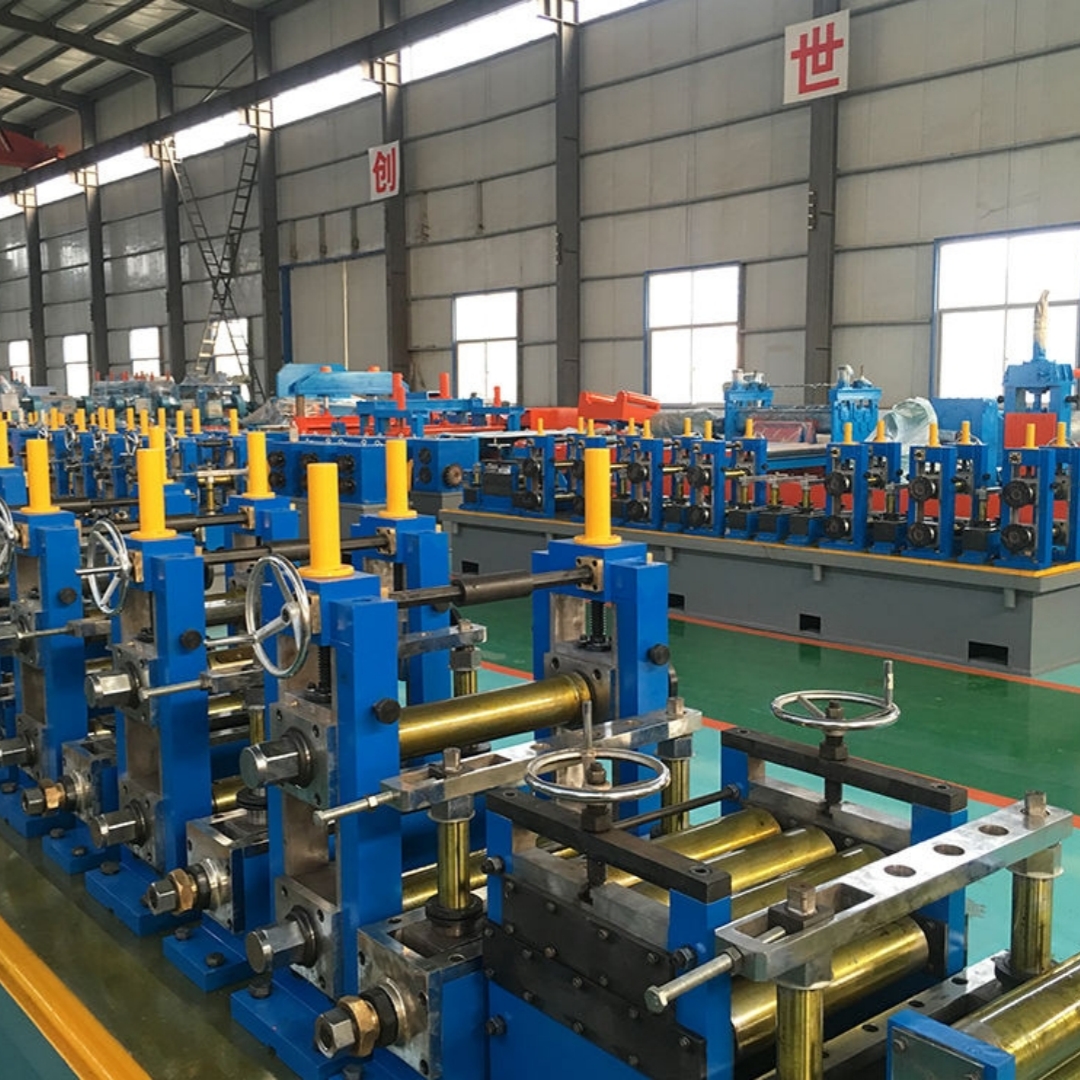
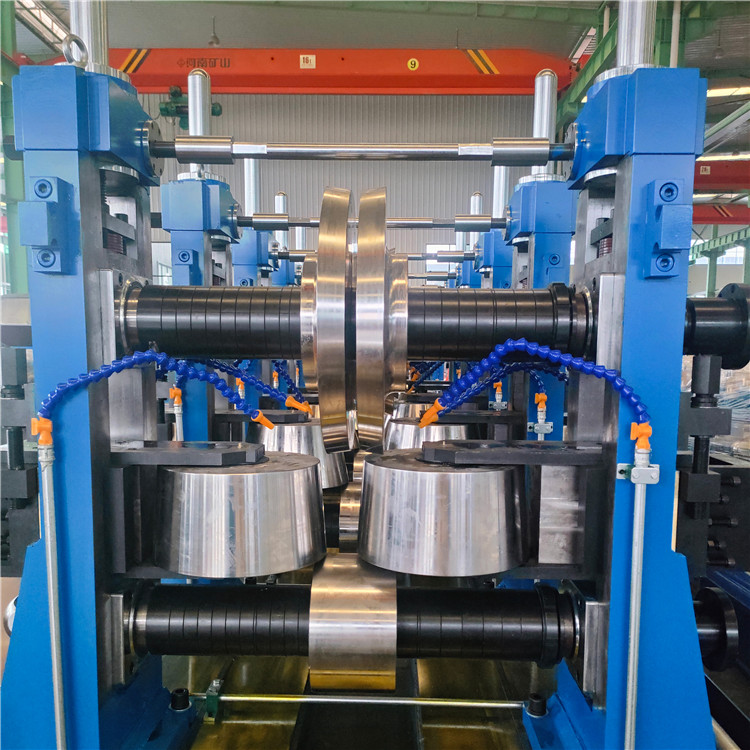
An ERW tube mill is a connected production system. The forming section gradually shapes the strip into an open pipe profile. The welding section joins the prepared edges, and the sizing and straightening sections control the final dimensions and shape.
These stages cannot be evaluated independently. A capable welding unit cannot fully compensate for unstable forming, unsuitable tooling or incorrect edge presentation. In the same way, welding a pipe successfully does not guarantee the required outside dimensions or straightness if the sizing section is not matched to the product.
When comparing quotations, buyers should therefore ask how the complete line is designed around the same pipe range—not just which high-frequency welder is included.
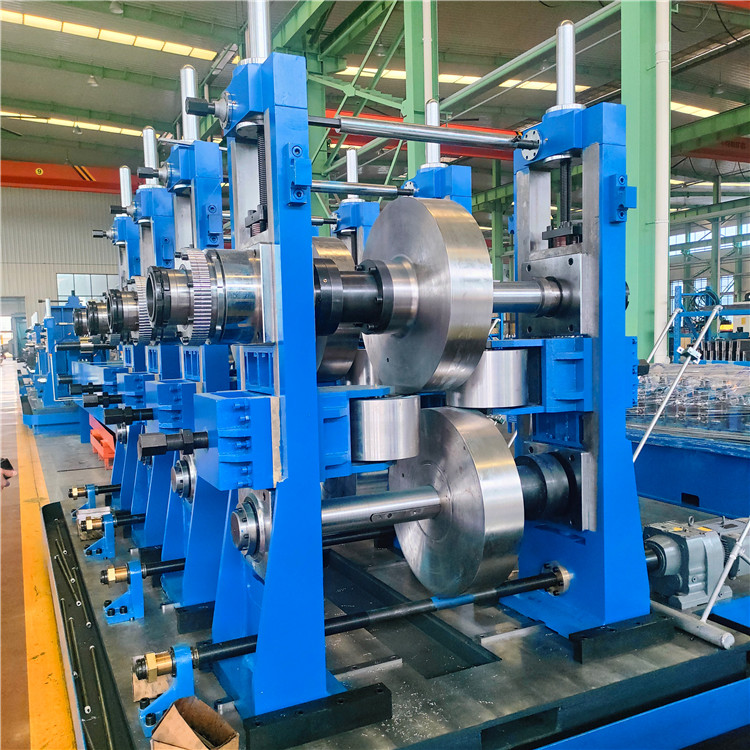
A production line that makes one pipe size for long campaigns has different operating priorities from a line that changes products frequently. Buyers should consider how many sizes will be produced, how often changeovers are expected and how much planned downtime is acceptable.
The tooling arrangement and adjustment method influence the work required during a size change. Depending on the selected line, operators may need to replace tooling, reposition stands and produce trial material before stable production resumes.
Before ordering, confirm which components must be changed or adjusted, what records should be kept for repeat products and what level of operator experience is required. If faster or more guided adjustment is important, discuss available changeover options with the supplier rather than assuming they are standard equipment.
The mill does not finish its job when the weld is completed. The cutting and discharge arrangement must also match the required pipe length, production rhythm and workshop handling method.
Buyers should discuss the proposed cutting method, length-control approach, discharge table and finished-pipe collection plan. If testing, bundling, packing or additional processing is required, these steps should be considered when planning the line layout.
A suitable downstream arrangement helps keep finished pipes moving away from the mill and reduces unnecessary manual handling. The exact configuration should be based on the product and production target rather than a general automation label.
A factory test gives the buyer an opportunity to compare the completed line with the agreed technical requirements before shipment. The test conditions should be discussed early, especially the material, target pipe size and inspection method.
Important checks may include:
Whether the agreed material and pipe size are used for the test;
Whether the forming, welding, sizing and cutting sections operate continuously;
Whether pipe dimensions and cut length meet the agreed requirement;
Whether the weld area and finished surface are inspected;
Whether the control and safety functions operate correctly;
Whether operating settings and test results are recorded;
Whether operating, maintenance and spare-parts information is available.
Acceptance criteria should come from the contract, product drawing or applicable standard. Buyers should avoid relying on an undefined statement that the machine “runs normally.”
A useful quotation depends on useful input. Before requesting a final proposal, prepare the following information:
Pipe shape and complete size range;
Wall thickness range;
Raw material and material standard;
Coil or strip dimensions;
Finished pipe length;
Required production capacity;
Frequency of size changes;
Local voltage and frequency;
Available workshop space;
Required cutting, testing, discharge and packing equipment.
Drawings, pipe samples and material documents can help the supplier understand the project more accurately. They also reduce the risk of important assumptions remaining hidden until manufacturing or commissioning.
An ERW tube mill can normally be designed for a specified product range. The number of sizes, required tooling and changeover method depend on the selected line. Buyers should provide a complete size list before the machine is designed.
Yes. Drawings, samples and material information help the supplier understand the required dimensions, application and production conditions. Clear input information makes it easier to discuss an appropriate line configuration and factory-test plan.
An ERW tube mill is more than a single welding machine. Forming, welding, sizing, cutting, controls and material handling must all support the same finished-pipe objective.
Before comparing final quotations, confirm the complete pipe range, wall thickness, raw material, required output, changeover needs and local electrical standard. Shuoen Machinery can then discuss an appropriate ERW pipe making machine configuration based on the actual production plan.


 +86 19331572740
 +86 19331572740
 admin@tsshuoen.com
