
Adding value for your metal plate products.


When an ERW pipe line produces unstable welds, the welding unit is often blamed first. In practice, weld consistency depends on the complete process—from strip preparation and forming to edge alignment, welding, cooling and sizing. A line may be able to run, but that does not automatically mean it can maintain stable pipe quality throughout a production shift.
For pipe manufacturers, the more useful question is: Which parts of an ERW tube mill help keep weld quality consistent during continuous production? Understanding these factors makes it easier to compare equipment, prepare raw material and establish a practical inspection routine.
Electric resistance welding joins the prepared strip edges after the material has passed through the forming section. If the strip enters the welding area with unstable alignment or an unsuitable edge condition, changing welding settings alone may not solve the problem.
Before production, operators should confirm the strip specification, thickness, width and surface condition. The entry and forming sections should guide the material steadily so that both edges approach the welding point in a controlled and repeatable way.
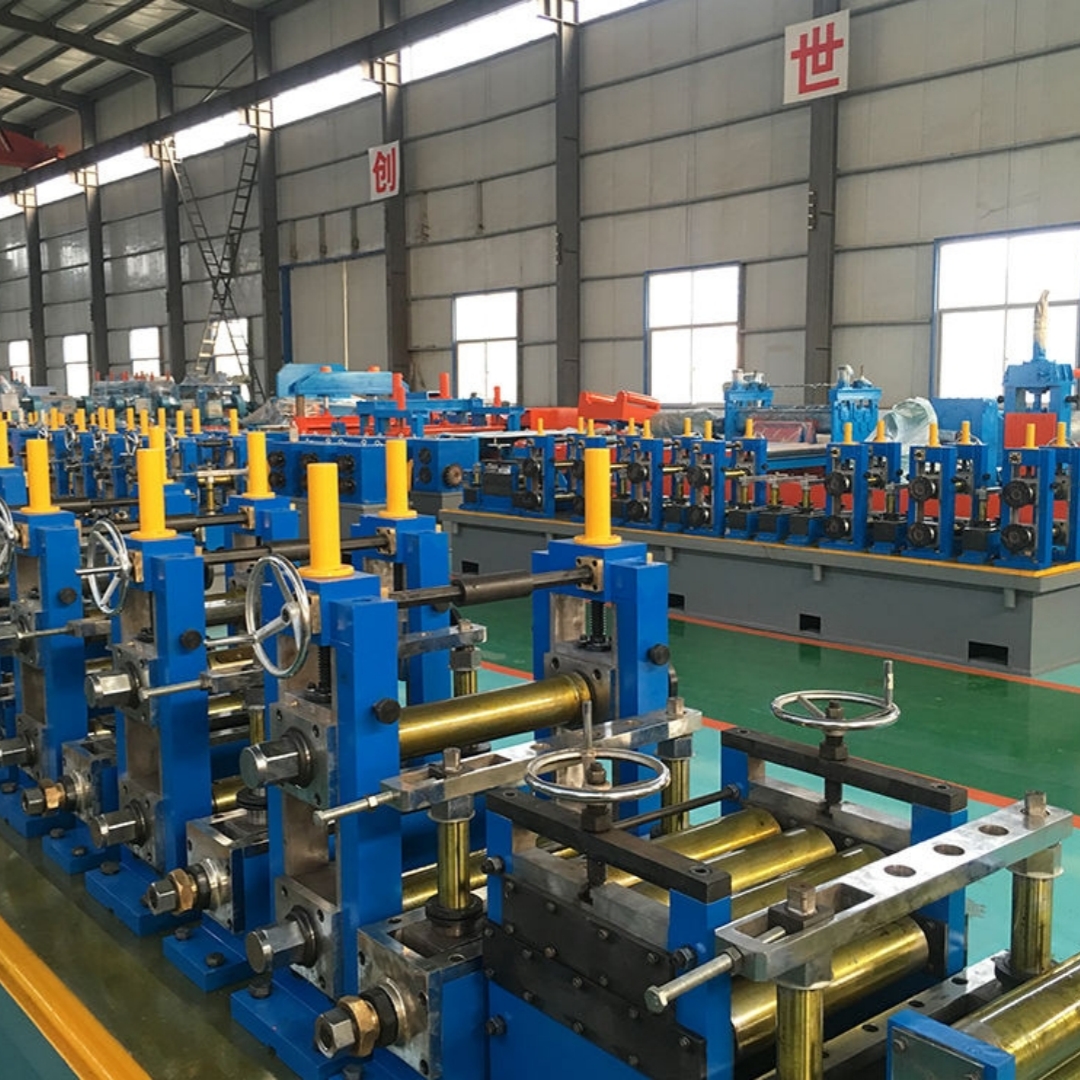
The forming stands gradually shape flat strip into an open tube profile. Their role is not simply to bend the material. They must also deliver the strip edges to the welding section with suitable alignment.
Tooling condition, stand adjustment and repeatable setup all influence this process. Worn rolls, unsuitable adjustment or inconsistent strip guidance can create unnecessary stress and make the edge position less stable. A well-matched forming arrangement provides a more reliable foundation for welding.
When evaluating a line, buyers should ask how the forming and welding sections are designed around the same pipe range, rather than comparing the welder as an isolated component.
At the welding section, the strip edges must meet under controlled conditions. The appropriate settings depend on the material, wall thickness, pipe size and production plan. There is no single setting that is correct for every product.
Operators should establish documented parameters for each regular pipe specification and verify the result during trial production. If a weld becomes unstable, the investigation should include strip condition, forming alignment, tooling setup and production speed—not only the electrical settings.
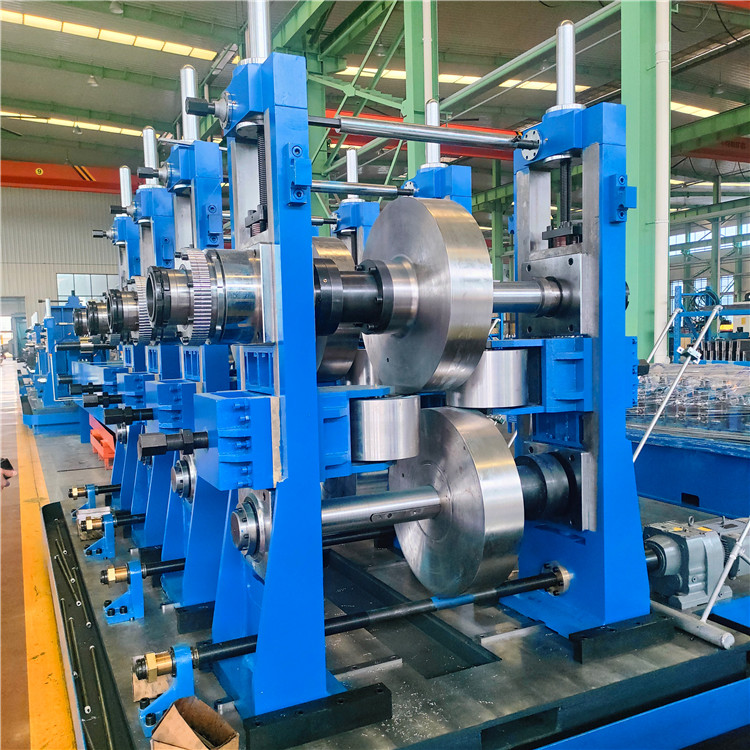
Welding is followed by downstream operations that may include weld-area treatment, cooling, sizing, straightening and cutting. These stages help the line produce pipe with the required shape, dimensions and length.
Cooling and sizing should be coordinated with the product specification. If downstream adjustment is unstable, finished pipe dimensions and straightness may vary even when the weld itself has formed successfully. This is why buyers should assess the complete production line rather than focus on one machine section.
A practical inspection plan combines process observation with checks on the finished pipe. The exact acceptance criteria should follow the contract, product drawing and applicable standard.
Routine checks may include:
Confirming the raw material and strip dimensions before production;
Checking tooling condition and stand adjustment;
Observing strip tracking and edge alignment;
Recording settings for each regular pipe specification;
Inspecting pipe dimensions, shape and cut length;
Examining the weld area according to the agreed inspection method;
Recording deviations and corrective actions for future changeovers.
Clear records reduce dependence on memory and help operators repeat a proven setup when the same product returns to the production schedule.
A factory test should demonstrate the agreed production objective, not just show that the motors and controls can operate. Before the test, the buyer and supplier should confirm the material, target pipe size, wall thickness, finished length and inspection method.
During the test, buyers can observe whether forming, welding, sizing and cutting operate as a coordinated line. They should also verify finished-pipe results against the agreed drawing or standard and request that important settings and inspection results are recorded.
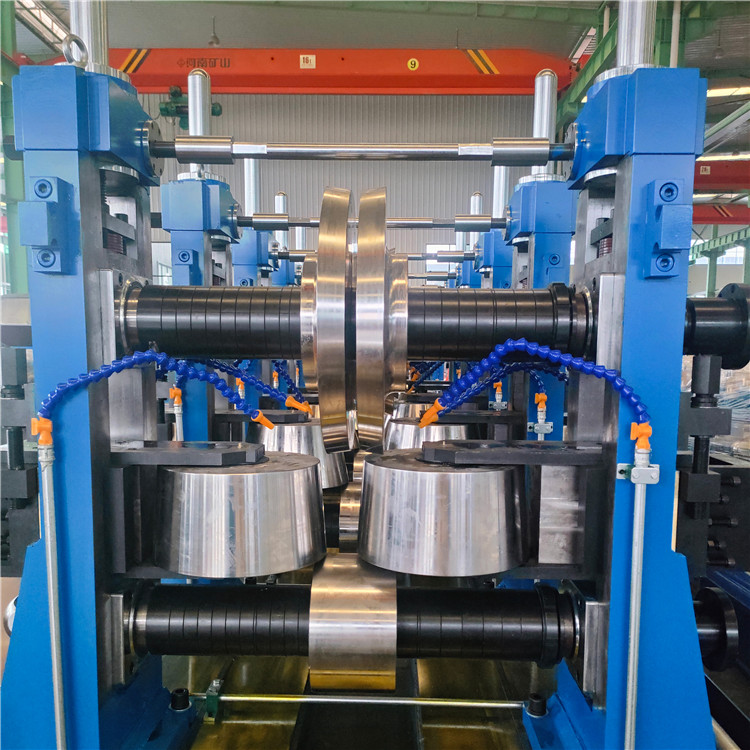
No single component can guarantee finished-pipe quality. The forming arrangement, edge alignment, material, welding configuration, sizing process and operating procedure must work together. Equipment should be selected around the required pipe range and production plan.
Different products may require different tooling positions and process settings. Recording an approved setup helps operators repeat production more efficiently and gives them a reference when investigating a deviation.
Inspection requirements depend on the pipe application, contract and applicable standard. Buyers should define the required checks and acceptance criteria before ordering the line and before the factory test.
Consistent ERW pipe production is the result of coordinated strip preparation, forming, edge alignment, welding, cooling, sizing and inspection. Improving only one section may not correct a problem created earlier or later in the process.
When planning a new line, provide the complete pipe range, wall thickness, raw material, required output, local electrical standard and acceptance requirements. Shuoen Machinery can then discuss an appropriate ERW pipe making machine configuration based on the actual production objective.


 +86 19331572740
 +86 19331572740
 admin@tsshuoen.com
